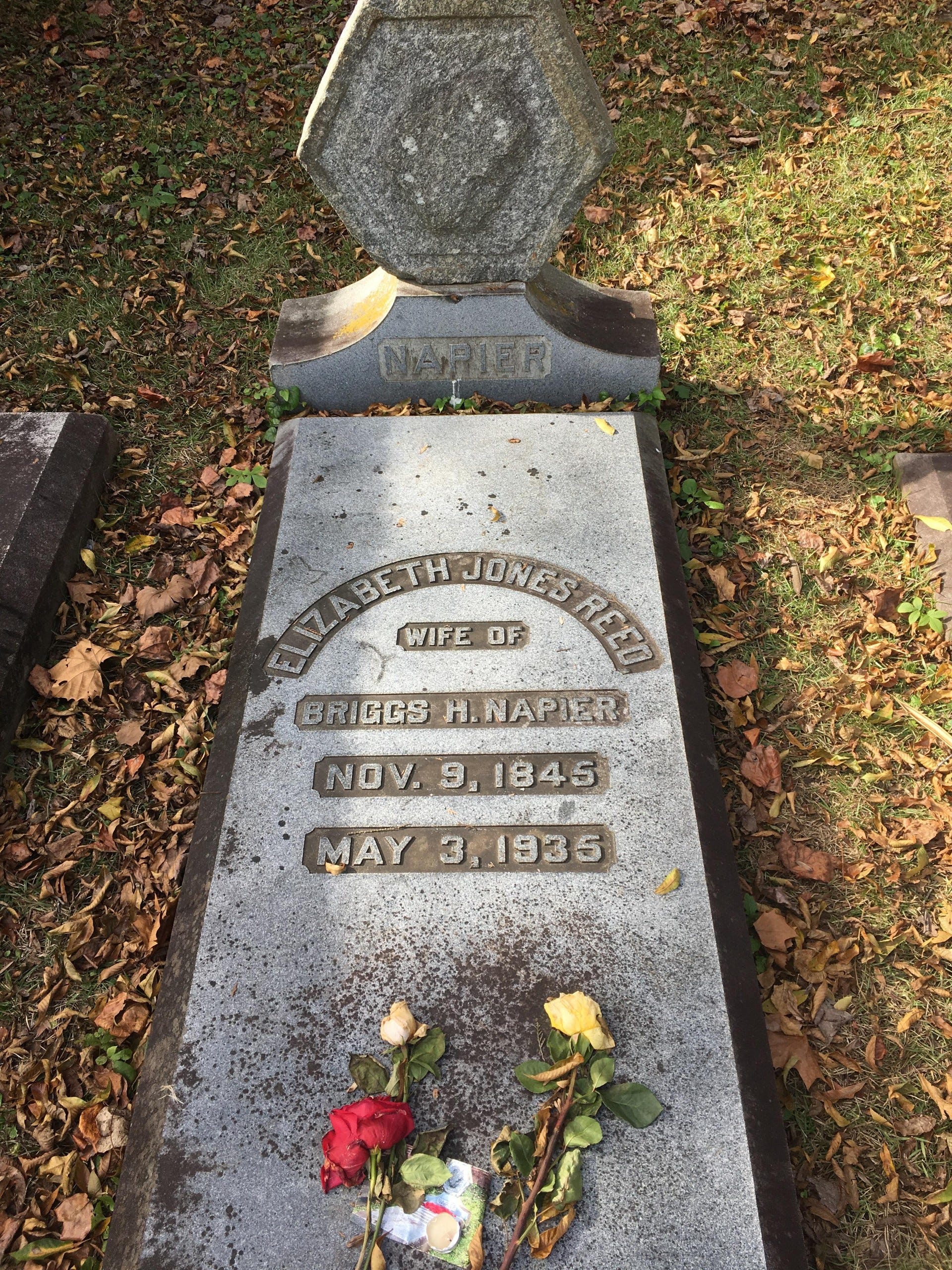
Elizabeth Jones Reed Napier has been dead for more than ninety years.
She is buried in Rose Hill Cemetery in Macon, Georgia, not far from the Ocmulgee River.
Her headstone bears her name.
Elizabeth Reed.
Sometime around 1969, Dickey Betts saw it.
He needed a name for an instrumental he had written, and Elizabeth Reed became the name he borrowed.
She could not have known what was coming.
Neither could the stone.
Long before I knew that story, I knew Macon for something else.
Ball.
For a kid coming up from southwest Georgia, Macon was where the big schools were. Coach Graham Lowe believed in playing up, so our Westwood teams went looking for people we probably had no business playing.
Mount de Sales. Tattnall Square. Stratford. Westfield. FPD. Windsor.
The old Macon Coliseum.
We won those games.
At Tattnall we broke their home winning streak, twenty-six to fifteen. I threw for two touchdowns, ran for another, and at some point had to chase down a kid considerably faster than I was to keep him from scoring.
There is probably a lesson about humility in having one of your better football memories involve tackling somebody who had just run away from you.
My senior year we came within one shot of playing for the state championship.
We had already beaten Stratford and Westfield.
Windsor was waiting on the other side.
A young Jason Aldean was on that Windsor team, although none of us knew there was any reason to remember that.
He was another kid playing ball.
Macon was full of people like that.
People who would become something later.
I did not know then that another kind of improvisation had been happening all over that city for years.
I had actually been learning it most of my life.
My grandparents, Granny Sue and O’Neal, helped underwrite juke joints back home.
I was young, but I remember those places.
Live music.
Improvised comedy.
People you might see on an ordinary afternoon suddenly coming alive when they stepped in front of a room.
There was no great announcement that art was about to occur.
Somebody just got up there and did something.
Then somebody else answered.
The room joined in.
That world eventually helped give me The Bees of Baker County, although I did not understand at the time that I was collecting anything.
I was just watching.
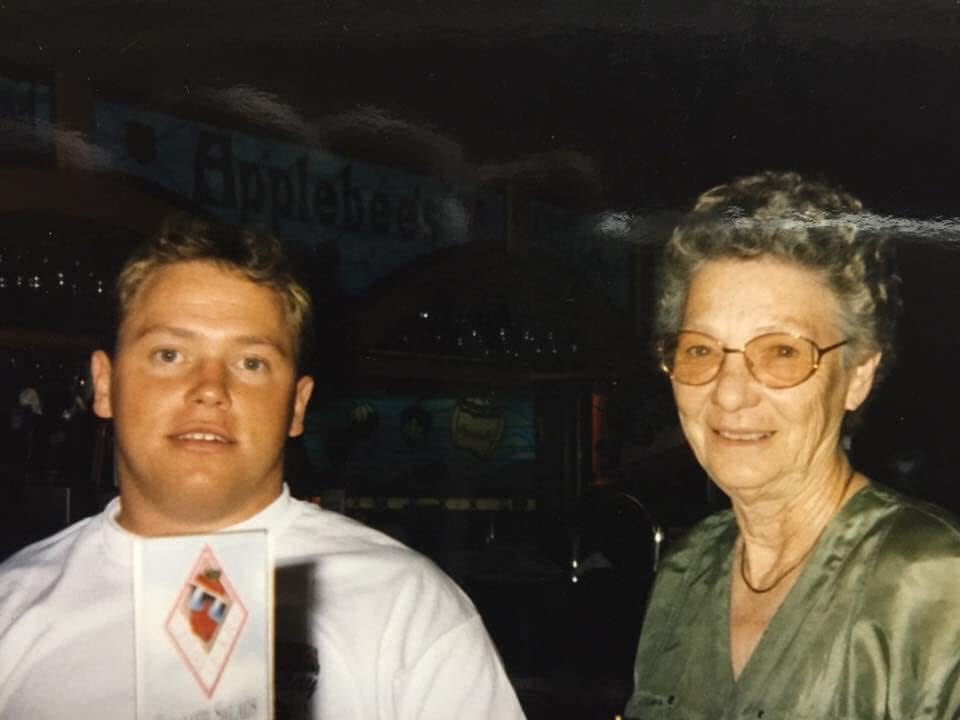
There was music everywhere in the family.
Having seventeen sets of aunts and uncles will expose a child to a fairly unreasonable amount of humanity.
And records.
Otis Redding was there.
So were the Fifth Dimension, Earth, Wind and Fire and early Steve Miller.
Through Penny West’s Baker County family came Zeppelin, the Stones and Pink Floyd.
KFran took me to shows at the Albany Civic Center.
Hank Williams Jr.
Alabama.
Skynyrd.
The Allman Brothers.
Hank was drunk the night we saw him.
At some point he lit a joint on stage.
KFran told me afterward it was a cigarette.
I was young enough to take her word for it.
Years later I read that the show got him banned from the building for a while.
She was not protecting me.
She was protecting Bocephus.
Nobody sat me down and explained Southern music.
Thank God.
They just played it.
Somewhere along the way I started noticing that the best music did not always behave itself.
A song could begin as one thing and become another.
There might be a melody everybody recognized, but then somebody would step away from it.
Another musician would follow.
The song would stretch.
Sometimes it seemed to disappear altogether.
And somehow they would find their way back.
Football had already taught me something about that.
There is a play in the huddle.
Everybody knows the play.
Then the ball is snapped and eleven people on the other side begin doing everything in their power to ruin it.
At that point the diagram becomes a suggestion.
You read.
You react.
You trust the people around you.
Sometimes the hole is not where it is supposed to be.
Sometimes the receiver breaks another way.
Sometimes everything collapses and you run.
My friend Wey Rooks got to Athens before I did.
He went there as a student in the mid-to-late eighties and found his people.
Nate.
Mike.
Duke.
One summer Brett, Wey’s younger brother, and I went up for his birthday.
By then Athens was already becoming Athens for me.
Widespread Panic was playing the Theatre.
And whatever had been planted back home was ready.
I usually found my way to Dave Schools’ side.
Partly because I could see Mikey Houser from there.
Mikey did not attack a guitar.
He seemed to stay inside a note longer than other people did.
That lingering lead.
I wanted to watch where it came from.
Schools was underneath it, pushing and pulling everything along.
Around the soundboard were the tapers, guarding their microphones and collecting nights the rest of us would otherwise have lost forever.
But I kept watching the women.
The dancers.
The spinners.
They were not dancing the way people dance when a band plays a song they like.
This was something else.
They seemed to be moving the music through the room.
A phrase would come off the stage and somehow enter them.
Arms.
Hair.
Skirts.
The floor was wet by the second set and nobody cared.
Then the crowd would move with them.
I did not have language for it.
I just knew the music was not stopping at the stage.
The room was playing too.
That is one of the things people misunderstand about live improvisational music.
They think the attraction is hearing a twenty-minute version of a song that could have been played in seven.
Sometimes, admittedly, that is exactly what is happening.
Not every journey requires three drum solos.
But on the right night something different occurs.
The musicians begin listening to one another so closely that composition turns into conversation.
One person says something.
Another answers.
Someone else leaves silence where a note could have gone.
The drummer changes the ground beneath everybody.
The bass finds a path through it.
The guitar starts wandering.
Nobody in the building, including the people playing, knows exactly what is coming next.
Dickey Betts understood that.
So did Duane Allman.
The Allman Brothers could take a composition and open the doors.
“In Memory of Elizabeth Reed” became one of those doors.
There is a melody.
There is a structure.
There is a place to begin.
And then they leave.
Listen to the famous Fillmore East performance and there are moments when the original song seems almost beside the point.
Dickey moves.
Duane answers.
Berry Oakley finds them.
Butch Trucks and Jaimoe keep the whole thing from flying apart.
They are not men showing you how well they memorized something.
They are finding out what happens next.
Together.
Which makes the origin of the song even stranger.
Because the name came from a cemetery.
Rose Hill was a place the Allmans knew well. They wandered there. They wrote there. They spent time among those stones above the Ocmulgee.
Dickey saw Elizabeth Reed’s name and carried it away.
The woman herself had nothing to do with the song.
She simply left a name carved in Georgia stone.
That was enough.
Fifty years after Dickey Betts walked out of Rose Hill with that name, I can stand in a Billy Strings pit and recognize something I first saw in those women in Athens.
The music moves.
The people move with it.
Billy stretches a song past its expected boundaries and the room somehow understands what is happening.
Nobody needs instructions.
Some nights I look around almost as much as I look at the stage.
There are still dancers.
Still people with their eyes closed.
Still people who seem to know a turn is coming before it arrives.
Different generation.
Different room.
Same thing.
The music leaves the stage.
People carry it.
Then they give something back.
Maybe that is why recorded music, for all its perfection, can never quite replace this.
A recording remembers what happened.
Live music asks what might happen.
There is risk in that.
A musician has to leave the safety of the melody.
He has to trust the people beside him.
He has to listen.
Really listen.
That may be the hardest part.
The great improvisers are not necessarily the people who play the most notes.
Sometimes they are the people who know when not to play one.
Leave some room.
Let somebody else speak.
Follow when following is required.
Lead when the opening appears.
And when everything has wandered so far from home that nobody can quite see the road anymore, listen for something familiar.
Four notes.
A rhythm.
A phrase.
There.
Home.
I suppose I have spent much of my life around some version of that.
Juke joints in southwest Georgia.
Football fields in Macon.
Rooms in Athens.
Concert halls.
There was usually a plan.
Then somebody snapped the ball.
Life has been fairly consistent about that.
Very little happens exactly as drawn.
Maybe that is why this music has stayed with me.
A theme appears.
We follow it for a while.
We lose it.
Somebody leans in and tells us what just happened.
That the key changed.
That the band went somewhere we did not know they could go.
I have lost track of how many people did that for me.
Most of them were not trying to teach me anything.
They just did not want me to miss it.
Then, if we are fortunate, something familiar comes through the noise and we find our way back.
Down in Macon, the Ocmulgee still passes Rose Hill.
Duane Allman is buried there.
So is Gregg.
People come looking for them.
Some also walk over to an older grave bearing the name of a woman born in 1845.
Elizabeth Jones Reed Napier.
A guitarist saw her name.
A song borrowed it.
Musicians carried the song around the world.
Thousands of people danced to it.
Other musicians entered it and found things inside it that Dickey Betts could not possibly have planned.
And all the while, above the river in Macon, the place where it started never went anywhere.
The music wandered.
The stone stayed still.
Boutwell Jones
redclaygospel.com